

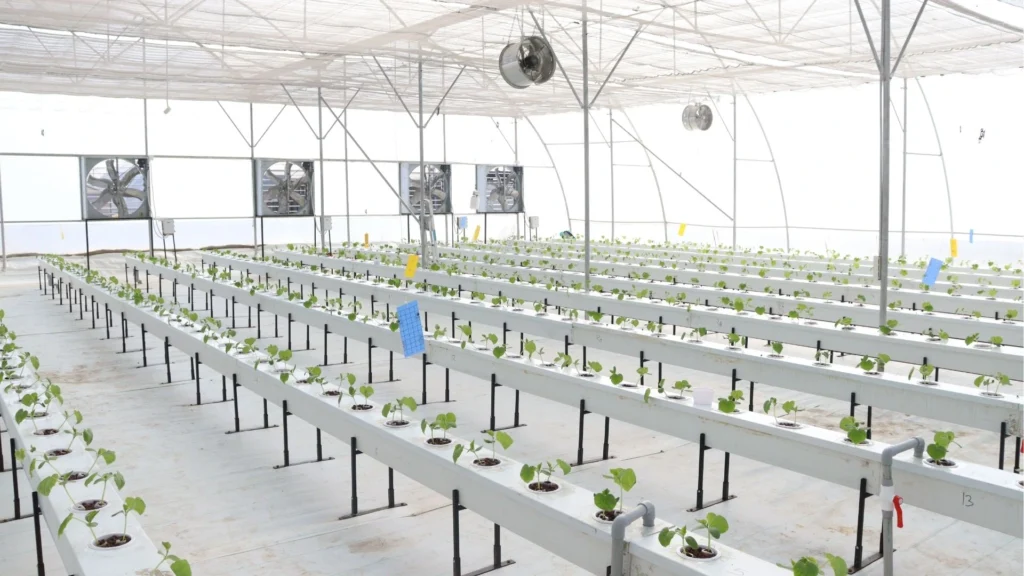
The global food system is at a critical inflection point, grappling with climate volatility, resource scarcity, shrinking fertile land and exploding urban populations. Against this backdrop, traditional open-field agriculture is increasingly costly and unreliable. Enter AgriTech and, specifically, Controlled Environment Agriculture (CEA), which is rapidly reshaping the economics of food production.
Indoor farming, including vertical farms and high-tech greenhouses, is not just a sustainable alternative but a superior economic model designed for the future. The global vertical farming market alone is projected to grow at a CAGR of over 28%, reaching $50.10 billion by 2032, demonstrating undeniable investor confidence.
At Eeki, a next-generation agritech company in India, we are witnessing this transformation first-hand. Our proprietary, climate-proof growing technology enables consistent, high-yield production of vegetables year-round — without soil and with minimal water consumption— making profitability and predictability possible even in extreme climates across India.
Resource Efficiency: Cutting Major Costs
The most compelling economic argument for indoor farming lies in its unmatched resource efficiency, directly reducing long-term operational costs (OPEX).
1. Water Conservation
Traditional farming consumes nearly 70% of global freshwater. Indoor systems, primarily using hydroponics and aeroponics, employ closed-loop circulation, using up to 95% less water than conventional farming methods.
At Eeki, our patented growing chambers take this further — maintaining optimal hydration levels without overuse or wastage, even in regions facing acute water crisis.
2. Land Use Optimization
Vertical stacking allows farms to produce equivalent yields using up to 99% less land. This minimises the impact of high urban land costs, which is crucial as farms move closer to consumers.
Eeki’s modular farms can be deployed in peri-urban , maximizing production capacity on non-arable or underutilized land — redefining what “cultivable” means.
3. Pesticide Elimination
By operating in a controlled environment, the risk of pests and diseases in plants is drastically reduced.
Eeki’s protected setups eliminate the need for chemical pesticides, ensuring cleaner produce, lowering input costs, and enabling the production of residue-free vegetables — a major win for both health and economics.
Yield and Predictability: The ROI Engine
Indoor farming converts land into a predictable, high-yield manufacturing asset.
1.Year-Round Production
By controlling temperature, light, and humidity, CEA facilities break the dependence on weather and energy resources. This enables 24/7/365 production, stabilizing supply and ensuring steady income. Eeki operates continuously across India’s extreme climates—battling heat of Rajasthan and humidity of Maharashtra, proving that controlled farming is not just scalable — it’s sustainable.
2.Accelerated Growth & High Density
Plants receive optimized nutrients and light, leading to significantly faster growth cycles. Vertical farms can produce 3 to 4 times higher yields per unit area.
Eeki’s farms are producing 15–18 times as compared to traditional farming technology and deliver consistent, high-density harvests of essential vegetables like tomatoes, cucumbers, and leafy greens — meeting urban demand with unmatched efficiency.
3.Quality and Traceability
Precision-grown crops guarantee consistency, quality, and longer shelf life.
At Eeki, every harvest is fully traceable, ensuring food safety and transparency — qualities that command premium market value and consumer trust, especially as demand for residue-free vegetables continues to grow.
Supply Chain Economics: Farm-to-Fork Advantage
Locating indoor farms in or near urban centres offers profound logistical and economic benefits.
1.Reduced Food Miles
Urban and peri-urban farms can reduce transportation distances by 80–90%.
Eeki’s farms are strategically positioned close to major consumption hubs, allowing for same-day delivery to retailers and consumers — cutting logistics costs and carbon emissions simultaneously.
2. Waste Reduction
Shorter supply chains mean fresher produce and less spoilage.
With Eeki’s just-in-time harvesting model, vegetables are harvested at peak freshness and delivered within hours, minimizing waste and maximizing value.
The Future of Profitable Farming
While the initial CAPEX (Capital Expenditure) for advanced CEA facilities is high, the long-term, compounding benefits — efficient resource use, increased yield, reduced climate risk, and superior supply chain logistics — solidify indoor farming as the winning economic model for food production in the modern age.
At Eeki, we’re proving this model in action — building a scalable, profitable, and climate-resilient farming ecosystem that makes fresh, nutritious, residue-free vegetables accessible year-round. For investors, retailers, and consumers alike, the economics of farming are changing — and Eeki is at the forefront of that change.