

Why Water Efficiency Matters for Future Food Security — and How Eeki Saves Up to 80% Water
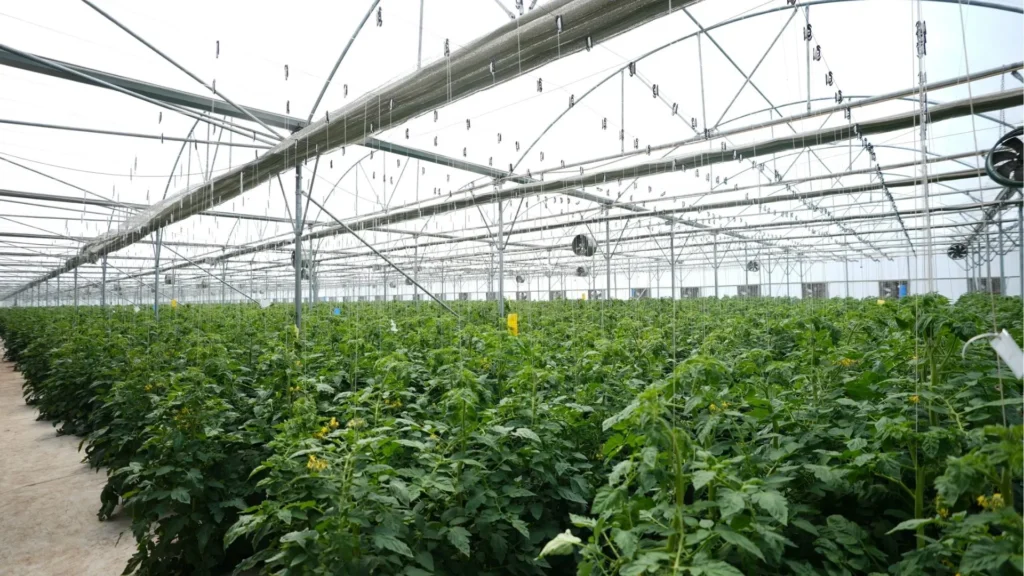
Water is life — especially when it comes to food. But the world’s water resources are under pressure from population growth, climate change and inefficient farming. Some projections from the UN and Global Commission on the Economics of Water suggest that by 2030, global demand for fresh water will outstrip supply by 40%. (Source)
For agriculture — the biggest water user — improving water efficiency isn’t optional — it’s essential to sustain the food systems of tomorrow. That’s where innovations like Eeki’s high-efficiency farming systems come in, saving up to 80% water compared to traditional open-field farming while still producing more food.
1. Water & Food: A Critical Link
Water is central to food production. To meet a typical adult’s daily caloric needs (~2,800 kcal), about 2,000–5,000 litres of water per person per day are needed to grow that food, far above the roughly 100 litres a person needs for daily drinking and hygiene.
-
CSIS: Around 70% of the world’s freshwater withdrawals go to agriculture — mainly for irrigation, livestock, and crop production.
-
In many developing regions, the figure is even higher.
-
In South Asia, agriculture accounts for about 90% of freshwater use.
2. Food Demand & Water Scarcity Are Rising Together
By 2050, global food demand is expected to increase by about 50% due to population growth and rising consumption. (Source) At the same time, water scarcity is becoming more prominent — 2.3 billion people live in countries with water stress.
Many major agricultural regions already withdraw water faster than it can be replenished. This mismatch between water demand and supply puts food production at risk — especially in water-stressed countries where agriculture is the backbone of rural livelihoods.
3. Why Water Efficiency Is Essential for Future Food Security
Water efficiency means getting more food (or biomass) from less water. This matters because:
🔹 Water availability is limited and shrinking
Only a small fraction of the world’s water is fresh and usable for agriculture and human needs. Freshwater sources like rivers, lakes, and aquifers are increasingly stressed.
🔹 Agriculture already uses the bulk of freshwater
About 70–72% of all freshwater withdrawals go to agriculture — and a significant portion is wasted due to inefficient practices like flood irrigation.
🔹 Water scarcity threatens food supply and prices
If farms can’t access enough water, crop yields drop, food becomes more expensive, and communities face food insecurity.
🔹 Water efficiency increases climate resilience
Efficient water use helps farms cope with droughts, heatwaves and lower rainfall — critical as climate change intensifies weather extremes.
4. Traditional vs Modern Farming: The Water Gap
Traditional open-field irrigation methods (furrow or flood irrigation) lose a substantial amount of water to evaporation, runoff, and infiltration. Smart farming systems — like drip irrigation, greenhouse cultivation and protected environment agriculture — reduce these losses significantly.
Evidence shows:
-
Modern protected systems like vertical farming can save up to 98% water compared to traditional agriculture by recirculating water and optimizing use.
-
Even micro-irrigation technologies can save 15–50% of water compared to conventional methods, which demonstrates how much water efficiency can shift the needle toward sustainability.
5. Eeki’s Contribution: Water Savings That Matter
Eeki’s farming systems — whether they use polyhouses, hydroponics, or other controlled-environment techniques — dramatically improve how water is used on the farm.
Read More: https://eeki.com/hydroponics-myths-vs-reality-investor-insights-by-eeki/
Up to 80% water savings compared to traditional open-field farming
This means for every 100 litres of water a conventional field might use, an Eeki system can grow the same food using just 20 litres. That’s a transformational reduction — especially in water-scarce regions.
These improvements come from:
-
Precision irrigation — water delivered exactly when and where plants need it
-
Controlled environments — reducing evaporation and runoff
-
Closed-loop systems — capturing and re-using water
6. What This Means for the Future of Food
Feeding more people with less water
With the global population projected to reach nearly 10 billion by 2050, water-efficient farming will be a cornerstone of food security. Increasing productivity without increasing water use protects both people and ecosystems.
Improved farmer resilience and income
Farms that use water more efficiently are less vulnerable to drought and water price fluctuations. They can also access premium markets through consistent supply.
Environmental sustainability
Reduced water extraction helps sustain rivers, lakes, and groundwater, benefiting biodiversity and long-term farming viability.
Water efficiency isn’t just a technical term — it’s a lifeline for our food systems. With agriculture consuming the lion’s share of our water resources and demand only rising, the only sustainable path forward is growing more with less water.
At Eeki, an agritech company in India, our farming practices save up to 80% of water compared to traditional farming. This is not just smart engineering. It’s a part of the blueprint for a water-secure, food-secure future that we want to keep on building.