

Why Indian Farmers Are Rapidly Adopting Polyhouse Farming
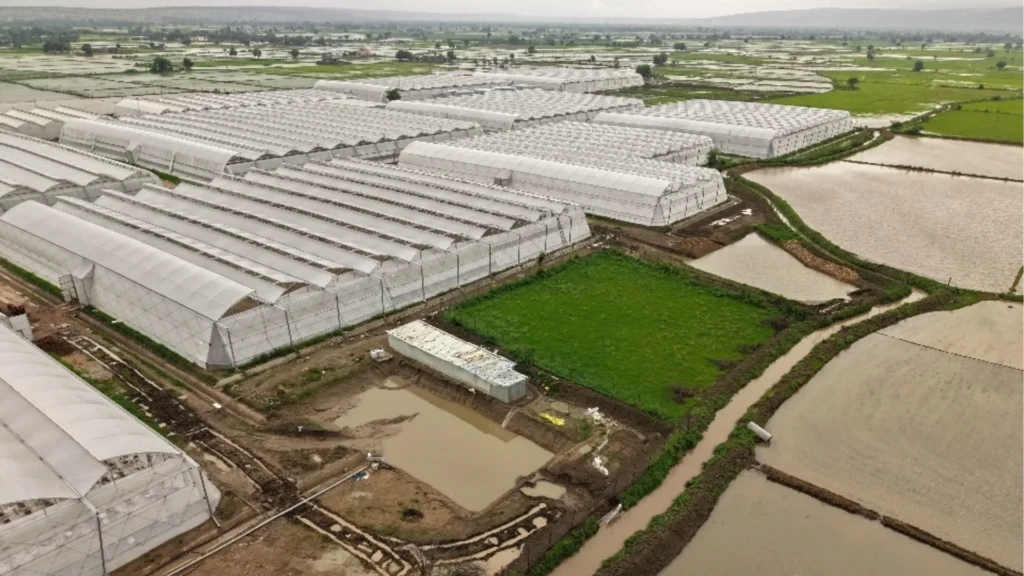
Polyhouse farming isn’t a trend — it’s a productivity and technique game-changer. Across India, growers are gradually switching from open-field to controlled environment agriculture because polyhouses deliver higher yields which in turn lower losses, and year-round crops when compared to traditional farming methods.
Let’s take a closer look at why polyhouses are gaining mass acceptance and trust.
1. The sector is growing — and fast
The Indian greenhouse / protected-horticulture market was valued at about USD 1.24 billion in 2024 and is forecast to expand rapidly. Investors and input companies are following the money because demand for off-season, quality vegetables and flowers continues to rise.
2. Scale: How big is protected cultivation today?
Globally, the area under protected cultivation was estimated at ~623,300 hectares in 2023, with major growth centers in China and the Netherlands.
In India, protected cultivation remains small — but is rapidly growing. Studies and surveys report roughly 100,000–110,000 hectares of land is under various protected structures, and this number is increasing as more farmers invest in polyhouses.
At Eeki, we’ve brought more than 100 acres of non-arable land and constructed our patented polyhouses on them.
3. Yields: the headline benefit
One of the clearest drivers is yield. Multiple studies from Indian research institutes show polyhouse yields are substantially higher than open-field yields — commonly 50% or more, and in some trials (for tomato, cucumber) over 100% higher per hectare, depending on crop and management.
More produce from the same land translates directly into higher farmer income.
At Eeki, we’ve achieved 18X more yield than traditional farming through our soilless growing techniques.
4. Profitability and quality — not just quantity
Beyond raw yield, polyhouses reduce crop losses from weather (hail, unseasonal rain), pests, and diseases, and allow better water and nutrient use. That means:
-
Higher marketable produce (less waste)
-
Consistent quality for buyers (important for retail / exports)
-
Ability to grow off-season and capture premium prices
Economic analyses under government schemes repeatedly show shorter payback periods when polyhouses are run commercially for high-value vegetables and cut flowers.
5. Government support lowers the entry barrier
Central and state schemes (for example, guidelines under the Mission for Integrated Development of Horticulture / NHB) provide subsidies and higher rates for infrastructure — making polyhouse installation affordable for many farmers and farmer groups.
This policy support is a major reason adoption is accelerating across states.
6. Climate resilience and resource efficiency
Polyhouses use water more efficiently and can reduce pesticide usage through better pest control, which aligns with climate-smart and sustainable farming goals.
For smallholders facing erratic monsoons, polyhouses provide a hedge against crop failure.
7. Who benefits the most — and how to make it work
-
Small and medium farmers who target nearby urban markets or packhouses see big returns from tomatoes, capsicum, cucumbers, leafy greens, and flowers.
-
Cooperatives and farmer groups reduce cost per farmer through shared polyhouse models and joint marketing.
8. Bottom line for farmers
-
More crop per square metre → 50%–100%+ yield uplift reported
-
Year-round and off-season crops → premium prices
-
Government subsidies → reduction in upfront cost and speedy adoption
Eeki’s role — making polyhouse success practical
At Eeki, an agritech company focused on controlled-environment and soilless farming, we design solutions that help farmers translate these advantages into real income: tech-enabled polyhouse designs, crop calendars, and buyer linkages that turn higher yields into reliable revenue.
If you’re a farmer or a cooperative thinking about moving to a polyhouse, Eeki can help with complete infrastructural prowess, guidance, and farm-ready agronomy.