

The Perfect Degree: How Temperature Control Turns Yield Uncertainty into Harvest Certainty
In traditional open-field farming, the quality and quantity of produce depend entirely on one unpredictable factor: the weather. A sudden heatwave, a chilly night, or a delayed monsoon can destroy an entire season’s effort.
At Eeki, we refuse to leave food to chance.
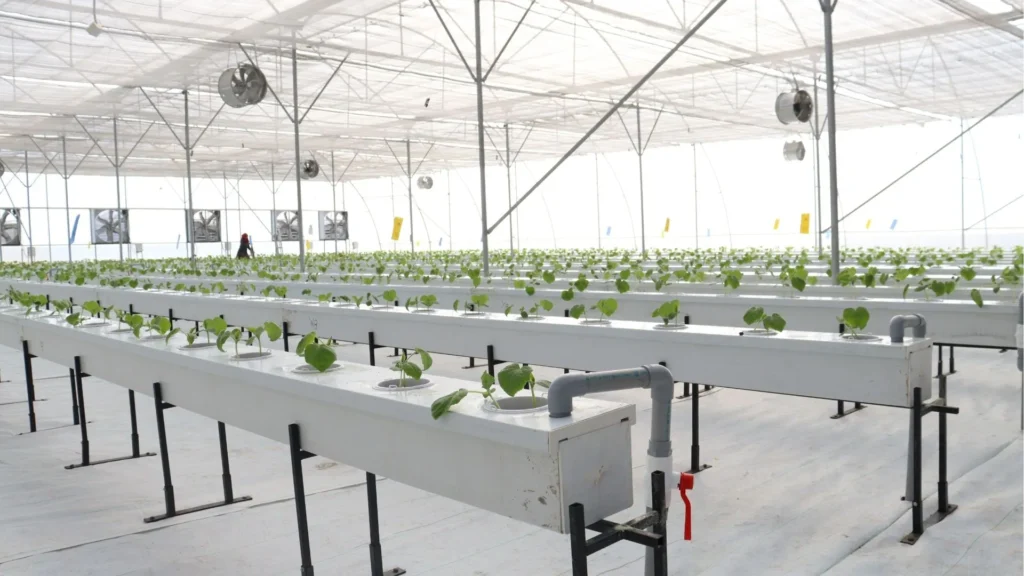
We have moved farming indoors, into technologically advanced polyhouses, where we control the environment with precision. As an agritech company focused on predictable and clean food production, we believe farming should be driven by science—not uncertainty.
Here is a simple look at how Eeki creates the perfect degree to ensure a guaranteed, residue-free harvest every time.
The Open-Field Problem: When Climate Goes Rogue
In natural conditions, plants are constantly fighting to survive. For high-value crops like those grown by Eeki, uncontrolled temperature fluctuations can be devastating.
Heat Stress
When temperatures rise too high—often exceeding 35°C for crops like tomatoes—the plant’s physiological and hormonal systems begin to break down. Instead of producing fruit, the plant shifts into survival mode, leading to:
Flower drop
Poor fruit setting
Reduced fruit size
Cold Shock
Unpredictable cold nights or sudden temperature drops disrupt critical reproductive processes. This affects pollen viability and results in fewer or deformed fruits.
Inconsistent Growth
Wide day–night temperature variations slow plant metabolism, causing uneven growth and making harvests inconsistent and unpredictable.
Eeki’s Solution: Precision Climate Control
Inside Eeki’s polyhouses, we create a “Goldilocks Zone”—an environment that is just right for our crops, 24 hours a day, 365 days a year.
Using advanced heating, cooling, and ventilation systems, we minimize temperature fluctuations so that plants can dedicate maximum energy to fruit production rather than survival.
The Science Behind Eeki’s Temperature Control
1. Fueling Photosynthesis, Not Respiration
Temperature is the primary driver of plant metabolism.
Photosynthesis—the process of converting light into sugar—is most efficient at optimal daytime temperatures
(e.g., 24°C–26°C for cucumbers)Respiration—the burning of that sugar for energy—increases rapidly as temperature rises, especially at night
When night temperatures are too high, plants burn through the sugars produced during the day, leaving little energy for fruit development.
Eeki maintains night temperatures within the optimal range—around 18°C–20°C for many crops—ensuring energy is preserved for producing larger, healthier fruits. This is achieved by trapping daytime heat and closing side vents in the evening to support proper fruit maturation.
2. Guaranteeing Perfect Fruit Set
For fruiting vegetables, temperature during the flowering stage determines success or failure.
Crops such as bell peppers and chillies are highly sensitive:
Low temperatures can cause pollen sterility
High temperatures lead to flower abortion
By maintaining a stable climate within the optimal range—21°C to 24°C for many vining crops—Eeki maximizes the number of flowers that successfully convert into fruits.
The Proof Is in the Yield: Data-Driven Success
The impact of temperature precision is clear when comparing protected cultivation with traditional open-field farming.
Tomato
A stable temperature enables continuous fruiting cycles. By avoiding heat stress above 35°C, plants set fruit consistently.
Studies show that greenhouse-grown tomatoes can yield up to 6.4 times more per unit area than open-field crops. In certain trials, controlled conditions have increased yield per hectare by over 136%.
Cucumber
Maintaining an average daily temperature between 15°C and 24°C supports rapid vegetative growth and fruit development.
Polyhouse cultivation often produces more than double the yield of open-field systems, with controlled environments reaching 78.4 tonnes per hectare, compared to 36.4 tonnes per hectare outdoors.
Bell Pepper & Capsicum
Consistent warmth and regulated humidity reduce physiological disorders such as blossom-end rot while improving fruit size and colour.
In some regions, protected cultivation yields are reported to be nearly 15 times higher than open-field equivalents, largely due to stable conditions and extended harvesting periods.
Quality and Purity: The Residue-Free Connection
At Eeki, yield is only half the story—the other half is purity.
When crops grow outside their ideal temperature range, they experience stress, making them more vulnerable to pests and diseases. This often leads to heavy reliance on chemical sprays in traditional farming.
Because Eeki controls the temperature and gives the plant a perfect, stress-free environment, the plant is naturally stronger. This robust health, combined with the physical protection of the polyhouse, drastically reduces the need for chemicals—allowing us to grow residue-free vegetables consistently and at scale.
The result is:
Higher yield
Uniform quality
Guaranteed residue-free produce
Turning Weather Uncertainty into Supply Certainty
At Eeki, we don’t just harvest more—we harvest better.
By controlling temperature with precision, we convert unpredictable weather into reliable supply. Every cucumber, tomato, and lettuce leaf is grown under conditions designed for purity, consistency, and excellence.
This is how Eeki transforms farming uncertainty into harvest certainty—one perfect degree at a time