

IoT in Agriculture: What It Is and How It Works
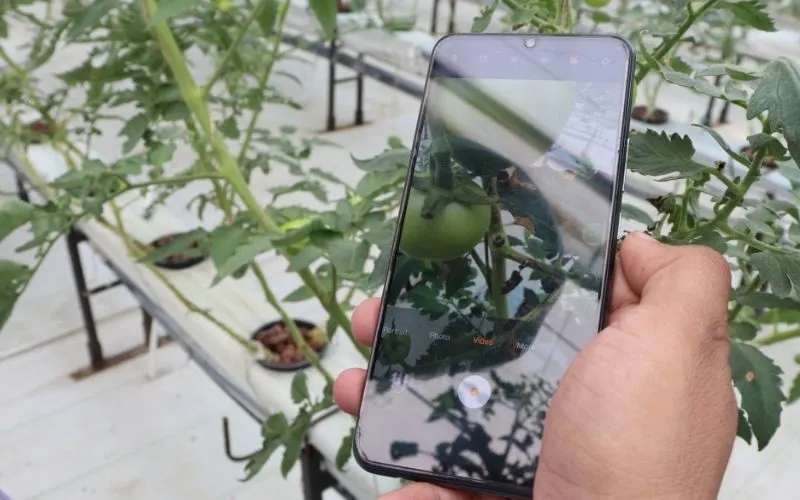
IoT in agriculture refers to the use of connected sensors, devices, and digital systems to monitor farming conditions and automate agricultural processes. It enables farmers to collect real-time data on soil, crops, weather, and livestock, helping improve productivity, reduce resource waste, and make data-driven decisions.
How Does IoT in Agriculture Work?
IoT in agriculture works through a simple cycle: data collection → transmission → analysis → action. Sensors gather field data, send it to cloud systems, where it is analyzed, and then used to automate or guide farming decisions.
How IoT Works in Agriculture (Step-by-Step)
1. Data Collection Using Sensors
Farmers use IoT sensors for agriculture to collect real-time data such as:
- Soil moisture and nutrient levels
- Temperature and humidity
- Crop health indicators
- Weather conditions
- Livestock movement
These sensors are placed across fields, irrigation systems, or attached to animals.
2. Data Transmission
The collected data is transmitted through:
- Mobile networks
- Wi-Fi
- Satellite communication
- LoRa (low-power networks)
This allows remote monitoring through mobile apps or dashboards.
3. Data Analysis
The data is processed using cloud platforms and analytics tools:
- Patterns and anomalies are detected
- Alerts are generated (e.g., dry soil)
- AI-based recommendations are provided
4. Automated Action
Based on insights, systems can:
- Automatically turn irrigation on/off
- Control greenhouse climate
- Apply fertilizers precisely
This reduces manual work and increases efficiency.
Key Components of IoT in Agriculture
- Smart Sensors: Collect real-time farm data
- Connectivity: Transfers data between devices
- Cloud Platforms: Store and process data
- AI & Analytics: Generate insights and predictions
- User Dashboards: Enable monitoring and control
Applications of IoT in Agriculture
Precision Farming
Apply water, fertilizers, and pesticides only where needed.
Smart Irrigation
Automatically irrigate crops based on soil moisture and weather.
Crop Monitoring
Track plant health and detect diseases early.
Livestock Monitoring
Monitor animal health and movement using wearable devices.
Greenhouse Automation
Control temperature, humidity, and light conditions automatically.
Traditional Farming vs IoT-Based Farming
|
Factor |
Traditional Farming |
IoT-Based Farming |
|
Decision Making |
Based on experience |
Data-driven |
|
Water Usage |
Often excessive |
Optimized (up to 30–50% savings) |
|
Monitoring |
Manual |
Real-time |
|
Efficiency |
Lower |
Higher |
|
Labor Dependency |
High |
Reduced |
Benefits of IoT in Agriculture
Increased Productivity
Data-driven insights improve crop yield and efficiency.
Water Conservation
Smart irrigation reduces water usage by up to 30–50%.
Cost Efficiency
Precise use of inputs lowers operational costs.
Better Decision-Making
Real-time data replaces guesswork.
Reduced Labor
Automation minimizes manual work.
Challenges of IoT in Agriculture
- High initial investment
- Connectivity issues in rural areas
- Learning curve for farmers
- Data privacy concerns
However, these barriers are decreasing as technology becomes more accessible.
Real-Life Example
A farmer installs soil moisture sensors in the field:
- Sensors detect low moisture levels
- A notification is sent to the farmer
- The irrigation system activates automatically
- Water usage is optimized
This entire process happens with minimal human effort.
IoT in Agriculture in India
The adoption of IoT is rapidly growing, supported by every agritech company in India working to make smart farming more accessible.
In India, IoT is being used for:
- Drip irrigation automation
- Soil health monitoring
- Weather-based crop advisory
- Precision farming for small-scale farmers
This is helping farmers increase yields while reducing costs and water usage.
Future of IoT in Agriculture
The future of farming will be increasingly automated and data-driven:
- AI-powered predictive farming will reduce crop loss
- Fully automated farms will become more common
- Sustainable farming practices will increase
- Food production will become more efficient
IoT will play a key role in ensuring global food security.
Quick Summary
- IoT in agriculture uses connected devices and sensors
- It works by collecting, analyzing, and acting on real-time data
- It improves efficiency, reduces costs, and saves water
- It is transforming traditional farming into smart farming
Conclusion
IoT in agriculture is revolutionizing how farming is done. By combining sensors, connectivity, and data analytics, farmers can make smarter decisions, automate processes, and improve productivity. Whether you’re managing a small farm or a large agricultural operation, adopting IoT-driven solutions can significantly enhance efficiency and sustainability in the long run.
If you’re looking to implement smart farming at scale, partnering with innovators like Eeki can help you transition from traditional practices to high-efficiency, data-driven agriculture with proven, commercially viable solutions.